
Why Home Lighting Design Is the Most Underinvested Part of Every Indian Home
Most homeowners spend months choosing flooring, furniture, wall finishes, artwork, and décor. Lighting is often handled much later.
By the time the electrical plan is discussed, the focus is usually on practical questions. Where should the ceiling lights go? How many plug points are required? Which fixture should be placed above the dining table?
The result may be a well-furnished home that still feels flat, harsh, or incomplete.
This is why home lighting design deserves far more attention than it usually receives. Lighting does not simply help people see a room. It influences how the architecture is experienced, how materials appear, how comfortable the space feels, and how easily it can adapt from morning to evening.
Good lighting can make a modest room feel warm and considered. Poor lighting can make even the most luxurious interior feel cold.
For Indian homeowners investing in modern interiors, lighting should not be treated as the final decorative layer. It should be planned from the beginning.
Why lighting is usually treated as an afterthought
In many Indian homes, lighting is still viewed primarily as an electrical requirement.
The electrical contractor may decide where the points go, while the homeowner selects fixtures after the ceilings, furniture layouts, and finishes have already been finalised. This approach may provide enough light, but it rarely creates a meaningful atmosphere.
A room does not need equal brightness everywhere.
The sofa area, reading corner, dining table, kitchen counter, artwork, passage, and television wall all serve different purposes. They need different intensities, positions, and types of light. When all these areas are lit in the same way, the room loses depth.
Thoughtful interior lighting ideas begin with function. What happens in this room? Where do people sit? Which surfaces need to be highlighted? When is the room used most often?
The answers should shape the lighting plan before decorative fixtures are selected.
One ceiling light cannot do every job
One of the most common lighting mistakes is depending on a single central ceiling fixture. It may brighten the room, but it cannot support every activity or mood.
A living room might be used for conversation, reading, television, entertaining, and quiet evenings. A single overhead light treats all these experiences the same way.
Effective modern lighting design uses several layers, each serving a different purpose.
Ambient lighting: Ambient lighting provides the general illumination of the room. It allows people to move comfortably and understand the space. This may come from recessed ceiling lights, cove lighting, wall lights, or a combination of sources. Ambient lighting should create an even base without making the room feel excessively bright.
Task lighting: Task lighting supports a specific activity. A reading lamp beside an armchair, focused lights above a kitchen counter, bedside lamps, and lighting near a dressing mirror are all examples of task lighting. The placement should respond to the user, not simply to the room’s symmetry.
Accent lighting: Accent lighting draws attention to a particular element. It can highlight artwork, a textured wall, an architectural detail, a sculpture, or a display shelf. This layer helps create contrast and visual hierarchy. Without accent lighting, important materials and objects may disappear once daylight fades.
Decorative lighting: Decorative lighting adds character. Pendant lights, chandeliers, sculptural lamps, and statement wall lights can work as design elements even when they are switched off. They contribute to the overall language of the interior.
The strongest lighting plans combine these layers instead of expecting one fixture to do everything.
Lighting changes how materials and colours appear
A material does not look the same under every kind of light.
Wood may appear richer under warm lighting. Stone may look flat if it is evenly flooded with light. Metallic finishes may create uncomfortable glare if a fixture is poorly positioned. Paint colours may look different at night from how they appeared in natural daylight.
This is why lighting should be considered when materials are being selected.
A room with expensive finishes can still feel disappointing if the lighting does not reveal their texture and depth.
In luxury interiors, materials are often selected for their detail. Natural stone, wood grain, textured fabrics, leather, metal, and artwork all respond differently to light. Their quality becomes more visible when the lighting has been planned carefully.
The relationship also works in reverse. The colour palette of the room should influence the type of lighting used. Darker interiors may need more controlled layers, while lighter rooms may require less intensity and better glare management.
Colour temperature shapes the mood of the home
Not all white light is the same.
Some lighting feels warm and golden. Other lighting appears cooler and slightly blue. This difference is known as colour temperature.
Warm lighting usually feels softer and more relaxed. It is commonly suited to living rooms, bedrooms, dining areas, and spaces intended for rest.
Cooler lighting may support concentration and visibility in certain work areas, utility rooms, or kitchens. However, very cool lighting throughout a home can make the space feel clinical.
The mistake is not necessarily using warm or cool light. The mistake is using different colour temperatures without a clear reason.
When one room contains several unrelated tones of white light, it can feel visually unsettled. A considered home lighting design plan creates consistency while allowing specific areas to serve their function.
The goal should be balance. The home needs enough brightness for comfort, but it should also feel welcoming.
Living room lighting should adapt throughout the day
The living room is often one of the most flexible spaces in an Indian home. It may host family, guests, television time, celebrations, reading, and informal work. Its lighting needs to respond to these changing uses.
Good living room lighting may include:
- General ceiling illumination
- A floor lamp near a reading chair
- Decorative lighting beside a console
- Focused light for artwork
- Soft lighting around the television wall
- Dimmable fixtures for evenings
- Table lamps for smaller pools of light
The room should not need to be fully illuminated every time it is used.
For a quiet evening, a floor lamp and two soft wall lights may be enough. For hosting, the room may need stronger ambient lighting along with decorative fixtures.
This flexibility is what makes lighting feel luxurious. The space can adjust instead of remaining visually fixed.
Kitchen lighting should be practical before it is decorative
Kitchen lighting is often planned around ceiling fixtures alone.
This creates a common problem. The person working at the counter may stand between the light source and the surface, casting a shadow exactly where visibility is needed.
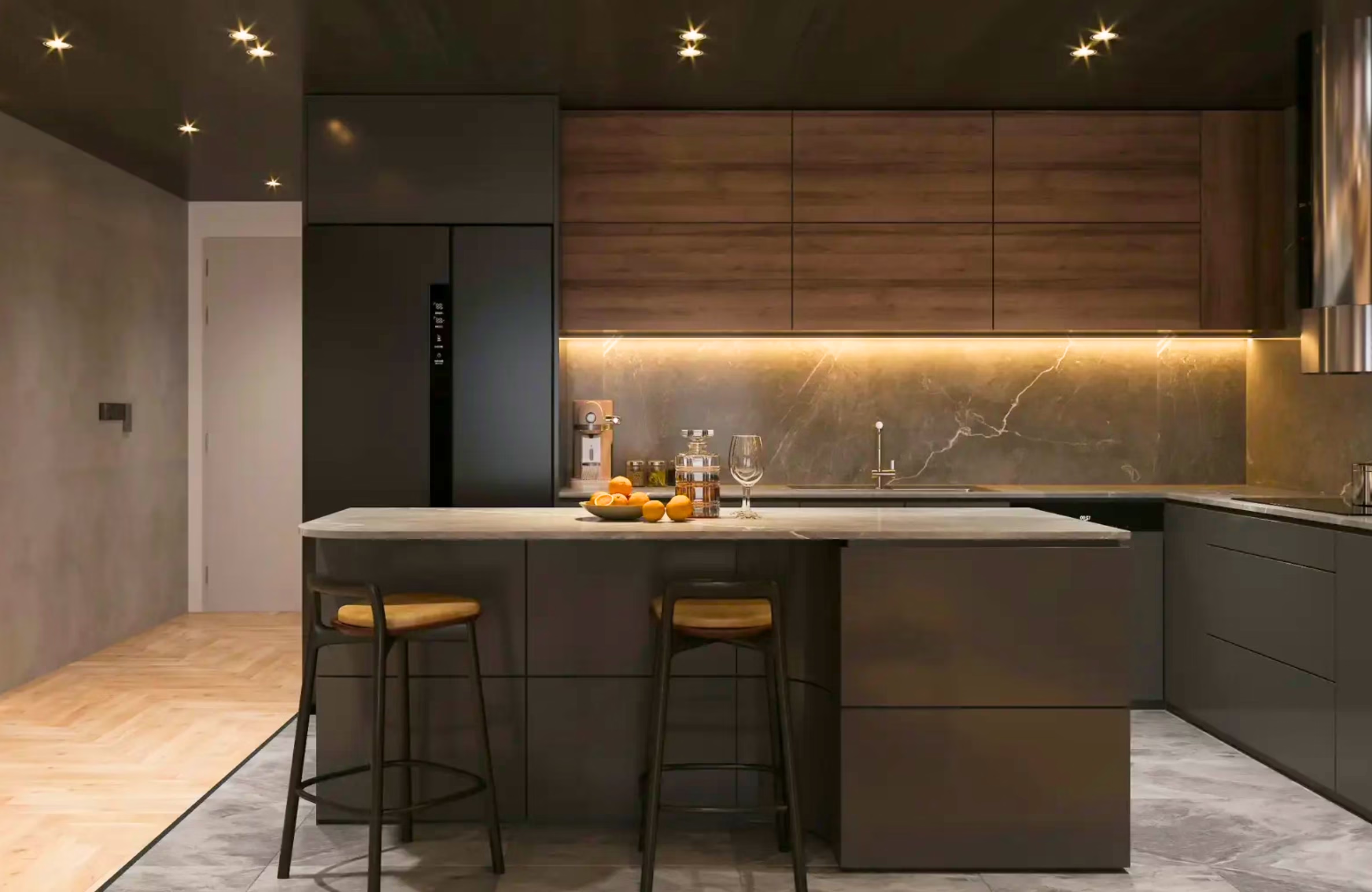
Good kitchen lighting should focus on task areas. Countertops, preparation zones, the sink, cooking surfaces, and storage should receive sufficient illumination. Under-cabinet LED lighting can be particularly useful because it directs light onto the work surface.
Pendant lights may work well above islands or breakfast counters, but they should not interfere with movement or sightlines. Decorative fixtures can add personality, but the kitchen must remain functional. Lighting should make cooking, cleaning, and organisation easier.
Bedroom lighting should support rest
Bedrooms are often overlit. Bright ceiling lights may be practical while cleaning or organising, but they can feel uncomfortable late at night. A bedroom needs lighting that helps the body and mind slow down.
A thoughtful plan may combine:
- Soft ambient lighting
- Bedside task lights
- Wardrobe lighting
- Focused light near a dressing area
- Low-level lighting for nighttime movement
- Dimmers for flexibility
Bedside lights should be positioned according to how the bed is used. A person who reads at night needs focused light that does not disturb the other side of the bed.
Warm lighting usually works well in bedrooms because it creates a calmer atmosphere. Decorative fixtures can add character, but comfort should remain the priority.
Statement fixtures need the right context
A beautiful chandelier or pendant can transform a room. It can also feel misplaced if the size, height, or location is wrong.
Statement lighting should relate to the architecture and furniture below it. A pendant above a dining table should feel centred on the table, not simply on the ceiling. A chandelier in a double-height space needs enough scale to hold its position visually. Wall lights should relate to the objects or surfaces around them.
This is especially important when selecting premium lighting for homes. The value of a designer fixture is not only in the object itself. It lies in how well it has been integrated into the space.
Italian lighting, sculptural ceiling lights, and decorative pendants can all add character, but they should not be selected in isolation. The proportions of the room, the furniture layout, and the desired mood need to be considered first.
Smart lighting is most useful when it simplifies daily life
Smart lighting is often presented as a luxury feature, but its real value is convenience.
Homeowners can create different settings for daily routines. A living room might have separate scenes for entertaining, television, reading, and late evenings. A bedroom can gradually shift to softer light at night. Passage lights can be controlled at lower brightness after dark.
Smart lighting may also support energy efficiency by allowing homeowners to control intensity, switch off unused zones, and schedule lighting more effectively.
However, technology should not make the home more complicated. Controls need to be intuitive. Family members and guests should be able to use the lights without learning a complicated system. Smart lighting works best when it quietly supports daily life.
Why good lighting is worth the investment
Homeowners sometimes hesitate to spend on lighting because it does not appear as substantial as a sofa, dining table, or flooring material.
But lighting affects every one of those investments. It determines whether the furniture feels inviting, whether the artwork is visible, whether the stone reveals its character, and whether the room remains comfortable after sunset.
Good lighting also improves functionality. It reduces dark corners, supports tasks, and helps each room adapt to different uses.
The investment does not always need to mean buying the most expensive fixtures. It means planning properly. A thoughtful lighting plan may include a mix of simple recessed lights, carefully positioned task lights, selected decorative pieces, and dimming controls. What matters is how the system works together.
Common home lighting mistakes to avoid
When planning residential lighting solutions, homeowners should avoid a few common errors:
- Relying on one central fixture
- Using the same intensity in every room
- Mixing unrelated colour temperatures
- Placing downlights without considering furniture
- Ignoring task lighting
- Creating glare near televisions and reflective surfaces
- Selecting decorative fixtures before understanding scale
- Forgetting to provide dimmers
- Lighting every wall and object equally
- Finalising the electrical plan before the furniture layout
A good lighting plan does not aim to make everything equally visible. It creates hierarchy.
Some areas should feel bright and functional. Others can remain softer. This variation gives the home depth.
Plan lighting before the interiors are complete
The best time to think about lighting is during the early planning stage. Furniture layouts, ceiling details, artwork locations, electrical points, and material selections should all inform the plan. Waiting until the end may limit fixture choices and lead to unnecessary changes.
Lighting planning should consider:
- Natural light during the day
- Room function
- Furniture placement
- Ceiling height
- Wall finishes
- Artwork and display areas
- Control systems
- Energy-efficient lighting
- Maintenance access
- How the room will feel at night
This creates a home that works as well after sunset as it does during the day.
Lighting is not the finishing touch
Lighting should not be treated as the final item selected after everything else is complete. It is one of the elements that brings everything else to life.
The right home lighting design can make a room feel larger, warmer, calmer, or more dramatic. It can improve function without sacrificing atmosphere. It can draw attention to craftsmanship and make ordinary routines feel more considered.
Most importantly, it helps a home respond to the people who live in it.