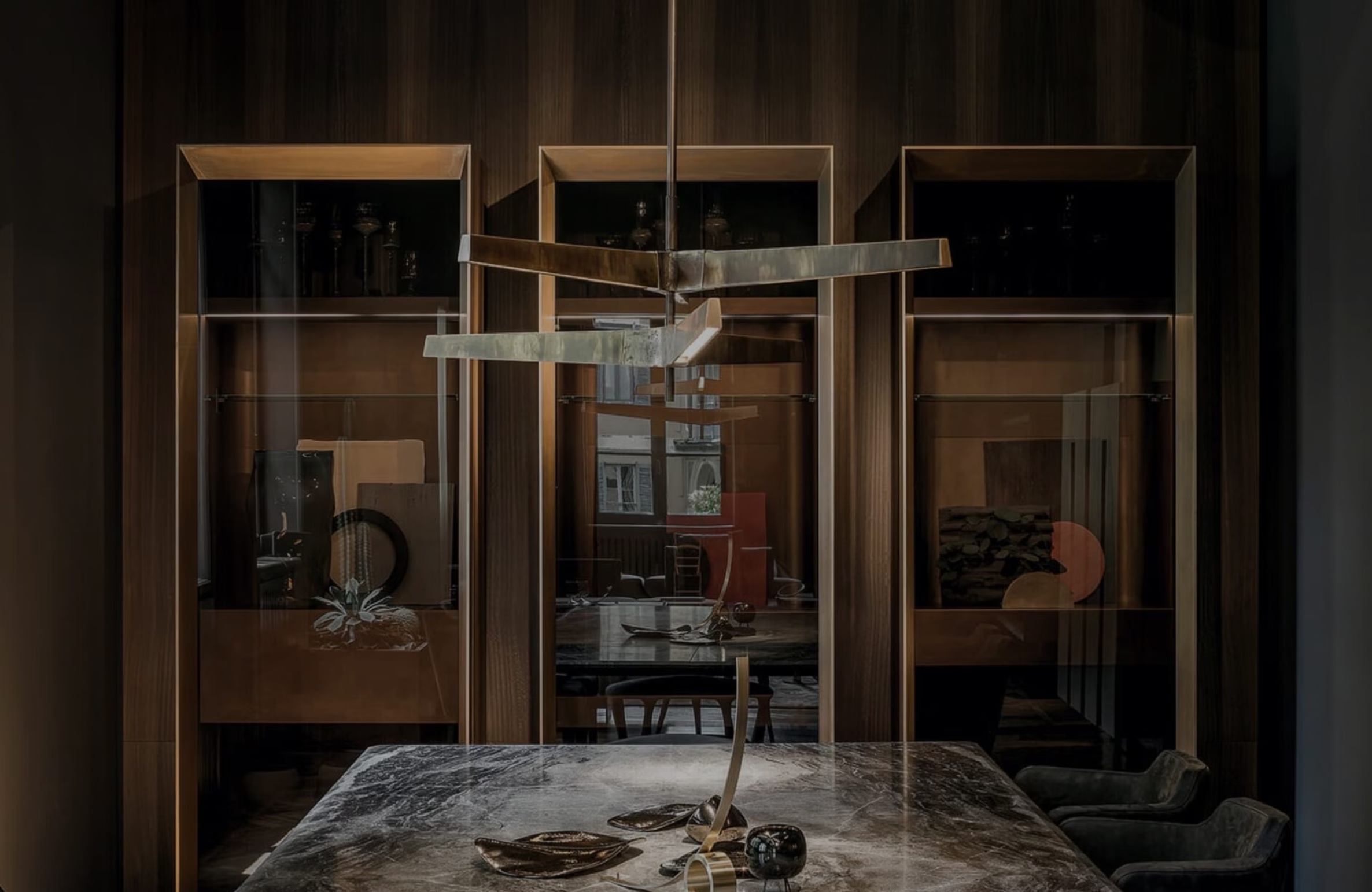

For years, the ideal Indian home was often presented as a perfectly matched set. The sofa matched the chairs. The dining table matched the console. The colours stayed consistent across every room, and the finished space looked as though it had been lifted directly from a showroom.
It was polished. It was also predictable.
Today, homeowners are moving away from interiors that look complete but say very little about the people living in them. Instead, they are choosing personalized home interiors shaped by their routines, memories, tastes, collections, and ambitions.
The shift is not simply about style. It is about ownership. People no longer want a home that reflects a generic idea of luxury. They want one that feels unmistakably theirs.
Showroom interiors are designed to appeal to the widest possible audience. They rely on familiar layouts, coordinated furniture sets, neutral palettes, and safe styling. That makes them easy to sell, but not always easy to connect with.
A real home has more layers. It has the chair someone reads in every evening, the dining table that hosts family during festivals, the artwork collected on a trip, and the corner that must work as both a study and a place to unwind.
That is why customized living spaces are becoming more desirable. They begin with the homeowner rather than the furniture catalogue.
Instead of asking, “What should a luxury living room look like?”, the better question is, “How should this living room work for the people who use it?” That one question changes the entire design process.
Good custom home interior design starts with observation. How does the family move through the home? Where do they gather? Do they host often? Is the kitchen simply functional, or is it the centre of the household? Does the bedroom need to feel minimal, layered, or restorative?
These questions influence every major decision. Space planning becomes more purposeful. Furniture is selected for the right scale and use. Lighting supports the mood of each room. Storage is designed around real belongings instead of generic assumptions.
The result is not just a better-looking home. It is a more functional one. This matters in modern home interiors, where one room may serve several roles. A guest room may also be a home office. A dining area may double as a work zone. A balcony may become an everyday retreat.
Personalization allows a home to support these needs without losing visual clarity.
The meaning of luxury is changing. Earlier, luxury was often associated with visible opulence, imported finishes, coordinated furniture sets, and formal rooms used only on special occasions. Today, luxury home interiors are becoming more thoughtful and less performative.
The new luxury is comfort without compromise.
It is a sofa designed for the exact scale of the room. It is lighting that changes with the mood of the day. It is storage that disappears into the architecture. It is a dining table made for the way a family actually gathers.
Premium interior design is no longer about filling a home with expensive objects. It is about investing in the right objects, materials, and decisions. This is why bespoke interior design matters. A bespoke piece can solve an awkward corner, anchor a large room, or connect materials already present in the home. Its value comes from both craftsmanship and fit.
The question is no longer, “How much does this piece cost?” The more relevant question is, “What does this piece contribute to the home?”
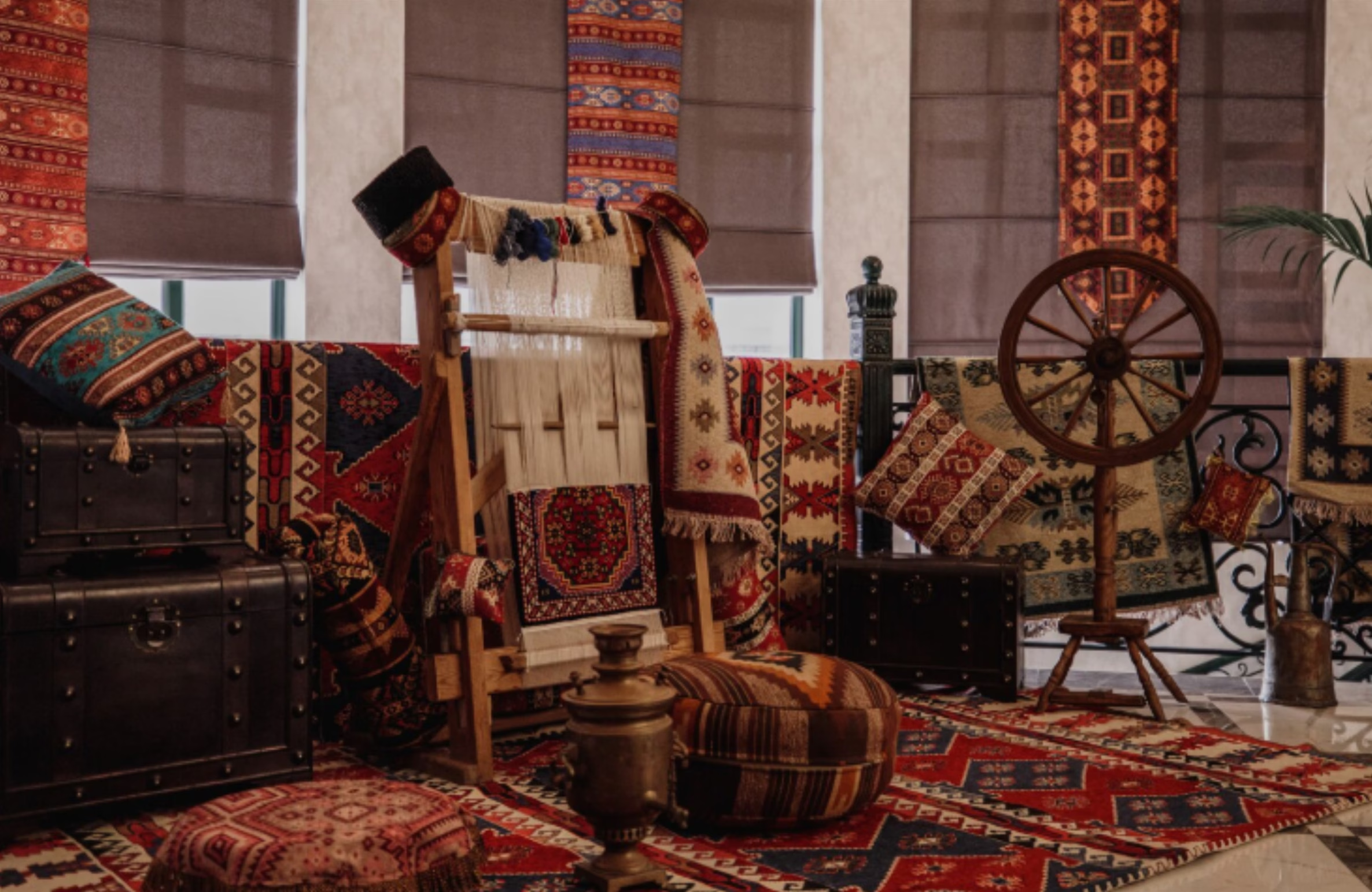
One of the clearest home interior trends in India is the move from perfectly coordinated rooms to curated spaces. A curated home does not require every item to match. Instead, the pieces relate through proportion, material, colour, or mood.
A contemporary sofa may sit beside a vintage chest. Italian interior design may be softened with Indian textiles. Modern artwork may be placed above a handcrafted console. A clean architectural shell may be layered with warm rugs, sculptural lighting, and personal objects.
The result feels more natural because it has contrast. It also feels more believable.
Real homes are rarely built from a single collection or completed in one shopping trip. They evolve. New pieces enter the home as lifestyles change, families grow, and tastes become clearer. A curated approach gives homeowners the freedom to build gradually. They can invest in designer furniture for the rooms that need a strong anchor, then add art, objects, and textiles over time.
The home begins to feel collected, not installed.
Italian interior design is associated with precision, elegant silhouettes, quality materials, and timeless form. But an Italian-inspired home does not have to feel like a showroom. Well-chosen Italian furniture can become a strong foundation for personalized home décor.
A sculptural sofa can establish the living room’s character. A refined dining table can create a sense of occasion without feeling overly formal. A distinctive light can work as both a practical element and a piece of art.
The key is context. Italian pieces should be selected because their scale, material, form, and function suit the home, not simply because they are luxurious.
A large sectional may look impressive in a showroom, but it will not work if it overwhelms the room. A dining table may have a beautiful finish, but it still needs to suit the way the family hosts. A light fixture may be sculptural, but it must complement the architecture around it. When combined with local art, bespoke furniture, meaningful objects, and lifestyle-focused interiors, Italian design can feel warm, individual, and completely at home in an Indian setting.
A personal home does not need to be filled with objects. Personalized home interiors can be minimal, colourful, restrained, or expressive. Personalization is not a visual style. It is a way of making decisions.
A minimalist home can still feel deeply personal if the layout supports the owner’s habits, the materials reflect their preferences, and every object has been chosen with intention.
Similarly, a layered home does not need to feel chaotic. Strong interior styling creates hierarchy. Some pieces lead, while others support. Art, lighting, furniture, and textiles are given enough room to work together.
The goal is not to display everything. It is to create elegant living spaces where the homeowner feels represented. That may mean displaying a small art collection in one carefully planned area rather than covering every wall. It may mean restoring an inherited piece and placing it beside contemporary furniture. It may mean choosing fewer objects, but making each one count.
Personalization is not about quantity. It is about relevance.
A personalized home is shaped by thoughtful choices:
This is where luxury interior designers add real value. Their role is not to impose the same signature look on every project. It is to understand the homeowner, edit ideas, solve practical problems, and translate personality into a clear design language.
The strongest high-end home design feels cohesive without feeling generic.
Some homeowners hesitate to personalize their interiors because they worry the result will feel dated. But timeless interiors are not created by removing personality. They are created by making thoughtful decisions.
Trends move quickly. A colour, shape, or finish that dominates social media today may feel overused within a few years. A home built entirely around current trends may therefore lose its relevance faster.
A personal home has a stronger foundation. When the layout suits the household, the furniture is well made, the materials age gracefully, and the pieces carry meaning, the interior is less dependent on what is temporarily fashionable.
Trends can still be introduced through smaller elements such as cushions, accessories, art arrangements, or paint. These can evolve without changing the home’s entire identity. The foundation should remain connected to the people who live there.
Indian homes are changing quickly. Work has entered the home. Hosting has become less formal. Travel has widened visual references. Homeowners have greater access to international design, but they are also more interested in retaining individuality.
As a result, the demand for home customization is growing. People are no longer satisfied with a beautiful home that does not function for them. They want contemporary interiors that reflect how they live now and still have the flexibility to evolve.
They may want global furniture paired with Indian craft. They may prefer open layouts but still need spaces that support privacy. They may enjoy modern luxury while wanting meaningful family objects to remain visible. These combinations cannot always be achieved through a fixed showroom package. They require listening, editing, and thoughtful integration.
The showroom home is not disappearing because people no longer appreciate beautiful furniture or refined styling. It is disappearing because beauty alone is no longer enough.
Homeowners want meaning, comfort, flexibility, and identity. They want modern luxury homes that feel polished without feeling staged. They want premium home design that supports daily life. They want interiors that can hold family traditions, personal collections, and changing needs.
Most importantly, they want a home that cannot be recreated by buying the same furniture set. That is the real value of personalized home interiors.