
Can Vastu and Contemporary Italian Design Coexist? We Think So.
Balancing Tradition and Modern Luxury
At first glance, Vastu and contemporary Italian design may seem to belong to completely different worlds.
Vastu is rooted in traditional Indian ideas about direction, room placement, natural elements, and the flow of a home. Contemporary Italian design is associated with clean lines, sculptural furniture, refined materials, and a modern approach to luxury. One looks to tradition. The other appears firmly focused on the present.
But they do not need to compete.
For homeowners who wish to follow Vastu principles, the choice does not have to be between a culturally meaningful home and a visually modern one. With thoughtful planning, Vastu and modern interior design can support each other without compromising function, comfort, or style. The key is understanding what each one contributes.
Vastu can guide the broader organisation of the home. Contemporary Italian design can shape its material language, furniture, detailing, and mood. One influences how the home is planned. The other influences how it is experienced. When they are brought together carefully, the result can feel harmonious, sophisticated, and deeply personal.
Vastu and modern interior design are not opposing styles
One of the biggest misconceptions is that Vastu is a visual style. It is not.
A Vastu-compliant home does not have to look traditional, heavily decorated, or filled with specific colours and symbols. Vastu is more closely associated with planning decisions such as orientation, entrances, room placement, circulation, and the use of natural light.
Contemporary design, on the other hand, is expressed through form, proportion, material, colour, furniture, and architectural detail. This distinction creates room for both approaches to coexist.
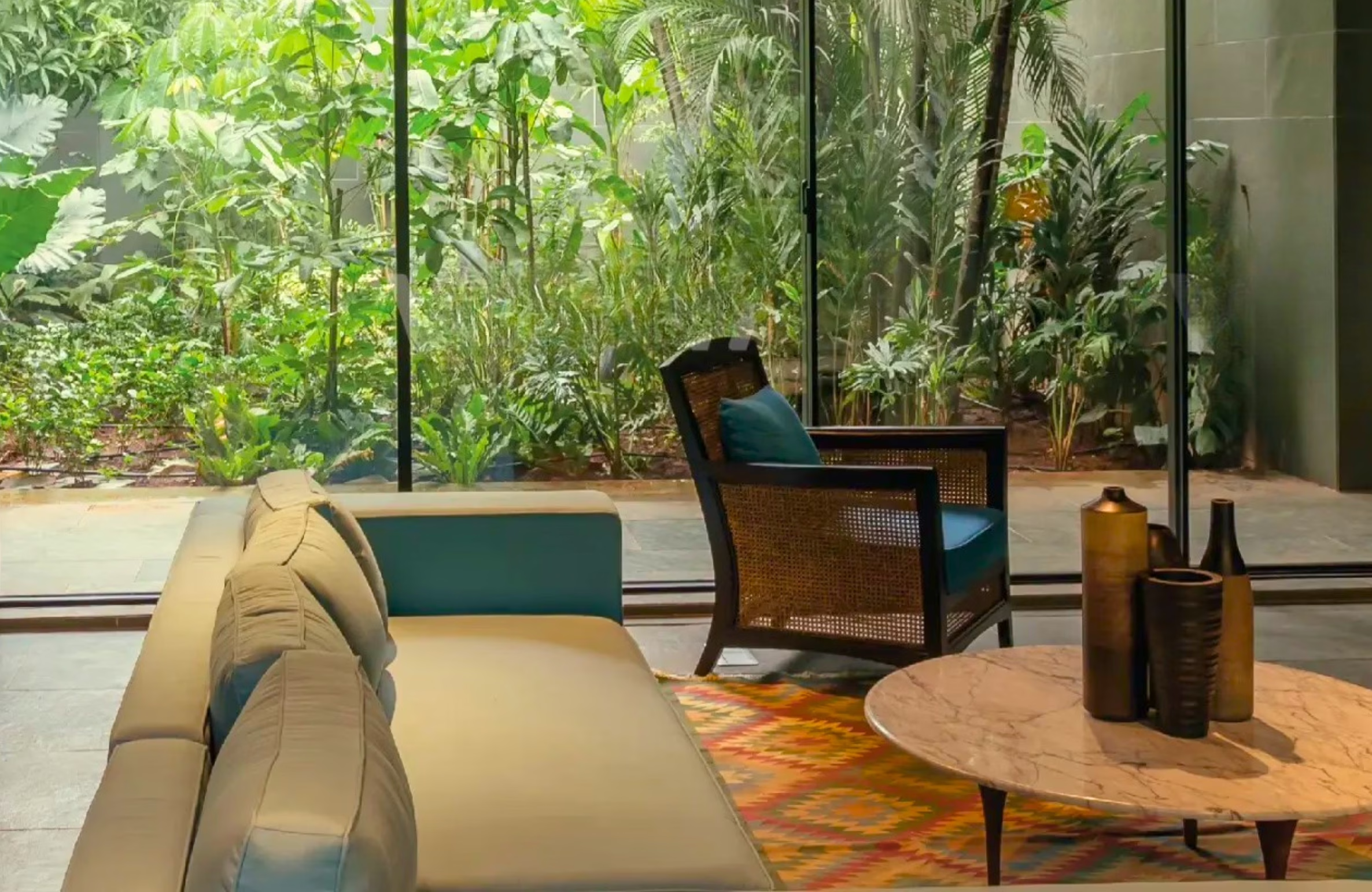
A living room can follow a Vastu-preferred orientation while still featuring low-profile Italian furniture, sculptural lighting, a restrained colour palette, and contemporary art. A dining area can be positioned according to the homeowner’s Vastu requirements while being furnished with an elegant Italian table and carefully selected chairs. A bedroom can retain a calm, modern aesthetic while the bed placement and room layout respond to the family’s beliefs.
The planning may be informed by Vastu. The visual expression can remain entirely contemporary.
Start with space planning, not decoration
The easiest way to combine Vastu with modern design is to address the planning requirements early.
Problems usually arise when Vastu is introduced after the architectural and interior decisions have already been finalised. At that stage, homeowners may feel pressured to move furniture awkwardly, block useful areas, or add decorative corrections that do not belong to the larger design.
Early space planning allows the design team to consider practical requirements alongside the homeowner’s Vastu preferences. This may include:
- The orientation of the main entrance
- The location of bedrooms and social spaces
- The placement of the kitchen
- The direction of key furniture
- Circulation between rooms
- Access to natural lighting
- The relationship between open and private areas
These decisions can be reviewed before the furniture and finishes are selected.
Good space planning should never focus on one principle alone. A room must still be functional. Doors need to open comfortably. People need enough space to move. Furniture should suit the scale of the room. Natural light should be used effectively. A successful plan brings these priorities together instead of allowing one to weaken the others.
Contemporary Italian design is highly adaptable
Italian interior design is often associated with bold villas, dramatic marble, and statement furniture. But contemporary Italian design is far more versatile than that image suggests. At its best, it values proportion, functionality, craftsmanship, and restraint.
These qualities make it surprisingly compatible with Vastu-compliant interiors. Italian furniture can be selected to fit a particular orientation or layout. Modular pieces can respond to rooms with unusual dimensions. Bespoke furniture can be adapted to meet both functional and directional needs.
A sofa does not lose its Italian character because it has been positioned according to a Vastu preference. A dining table does not become less contemporary because the room has been planned around a traditional consideration. What matters is that the piece has the right scale, material, and relationship to the room.
This adaptability is particularly useful in Indian homes, where interior planning often needs to account for family routines, hosting, storage, cultural preferences, and multiple generations.
The living room can balance openness and direction
The living room is one of the most visible areas of the home, so it is often where concerns about Vastu and contemporary design first appear.
A Vastu consultant may recommend a particular seating direction or placement of heavier furniture. A designer may be thinking about symmetry, conversation, views, television placement, and circulation. These priorities can usually be balanced through a well-considered furniture plan.
Instead of forcing a standard sofa set into the room, the layout can be created around the available space and directional preferences. A modular sofa may allow more flexibility than a fixed arrangement. Lounge chairs can complete the conversation area without obstructing movement. A slim console may provide visual structure without making the room feel heavy.
Contemporary Italian furniture works particularly well in these situations because many pieces are designed with clarity and proportion in mind. The room can remain open, elegant, and modern while still respecting the homeowner’s planning requirements.
The focus should remain on creating a living room that feels comfortable and natural, rather than one that appears arranged around a set of visible rules.
Natural light connects both approaches
Natural light is valued in both Vastu and contemporary interior architecture.
For homeowners who follow Vastu, sunlight and direction may hold cultural significance. For designers, natural light affects mood, material selection, colour, and the way a room is experienced throughout the day. This shared emphasis can become a strong point of connection.
Large windows, clear circulation, lighter window treatments, reflective surfaces, and carefully positioned furniture can help natural light move through the home. Italian furniture with refined silhouettes can preserve that openness. Slim profiles and raised forms may allow light to travel through a room more easily than bulky pieces. Mirrors can be positioned thoughtfully to extend light, provided their placement also suits the homeowner’s preferences.
Artificial lighting should then support the natural cycle of the home. Warm ambient lighting, focused task lights, and carefully selected decorative fixtures can help rooms remain comfortable after sunset without disrupting the overall harmony.
Materials can feel modern without losing warmth
A common fear is that contemporary Italian design will make a Vastu-led home feel cold or excessively minimal. That does not have to happen.
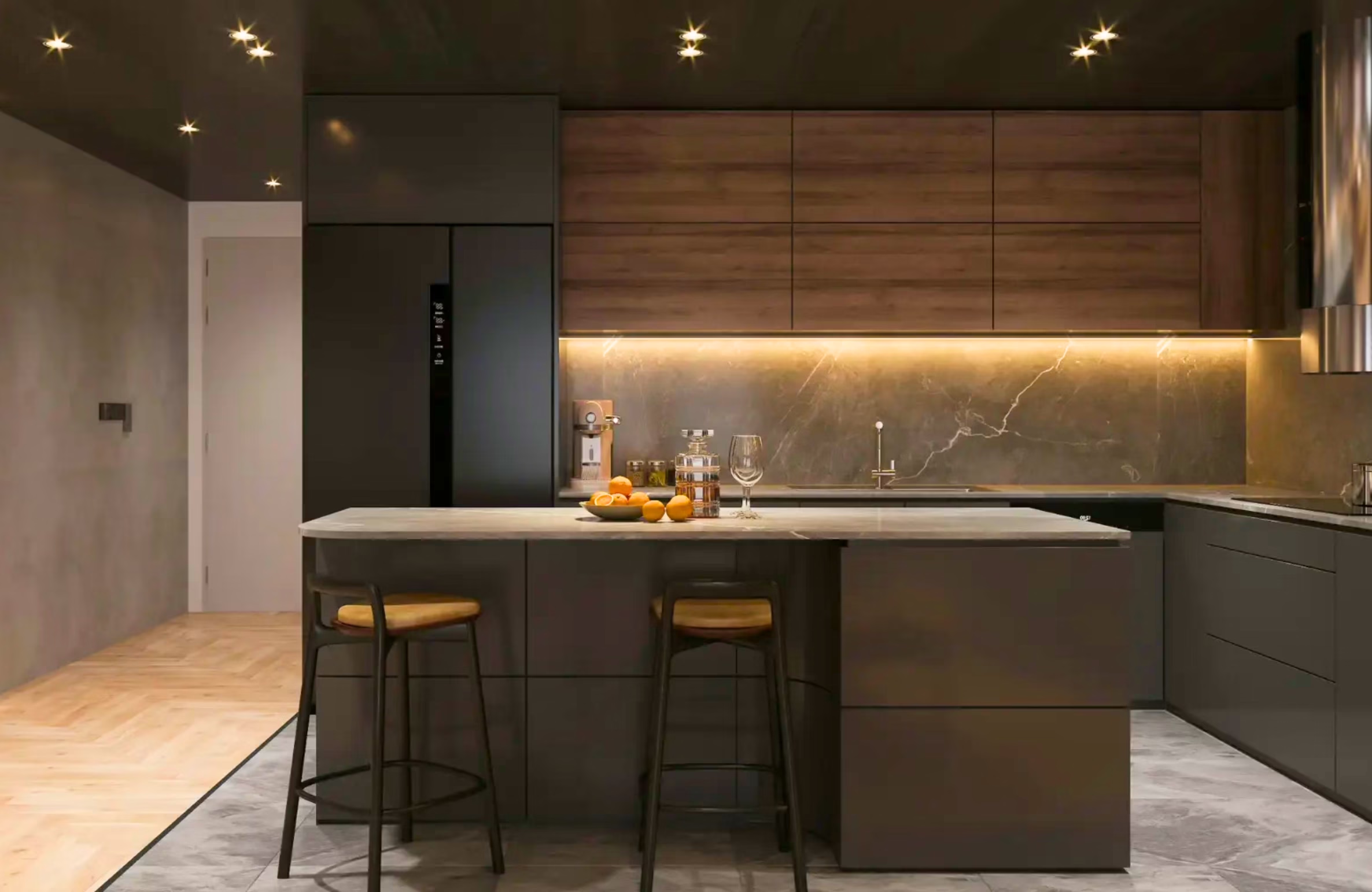
Italian design includes a wide range of warm and tactile materials, including natural wood, leather, soft upholstery, stone, textured glass, and brushed metal. The material palette can be adapted to suit both the architecture and the emotional tone of the home.
A modern living room may combine:
- Warm wood finishes
- Neutral upholstery
- Sculptural Italian furniture
- Natural stone
- Textured rugs
- Soft drapery
- Handcrafted Indian objects
- Contemporary art
The result can feel refined without feeling clinical. This is where luxury interior design becomes more than surface styling. The materials need to support the way the home is lived in. They should be durable, comfortable, and appropriate for the climate and maintenance preferences of the household. Premium interiors work best when luxury is felt through quality and balance rather than through visual excess.
Vastu does not require a traditional colour palette
Another common assumption is that Vastu-compliant interiors must use a fixed set of colours in every room.
Many homeowners do have colour preferences based on the direction or function of a space. However, these preferences can be interpreted through a contemporary palette rather than applied in an overly literal way.
For example, a recommended warm colour does not need to result in a brightly coloured room. It may appear through a muted textile, artwork, rug, or carefully selected accent. A preference for natural tones can be expressed through wood, stone, leather, and soft neutral fabrics.
Colour can be introduced in layers:
- Architectural finishes
- Furniture upholstery
- Artwork
- Cushions and textiles
- Decorative lighting
- Accessories
This makes it possible to respect the homeowner’s Vastu considerations while maintaining a cohesive and sophisticated design language.
Bespoke interiors solve conflicts more elegantly
Standard furniture does not always fit the needs of a Vastu-conscious home. A ready-made piece may be too large for the recommended position. A cabinet may block movement. A sofa may only work when placed in a direction that does not suit the homeowner’s preferences. This is where bespoke interiors become useful.
Custom furniture can be designed around:
- Exact room dimensions
- Specific directional requirements
- Existing architecture
- Storage needs
- Family habits
- Furniture placement
- Preferred materials and finishes
A custom console can fit a difficult wall without disrupting circulation. A modular sofa can respond to both orientation and conversation. A dining table can be proportioned for the room instead of forcing the room to adjust around it. Bespoke design allows the home to follow its own logic. It also prevents Vastu from being treated as a collection of last-minute corrections. The requirements become part of the design from the beginning.
Open floor plans can still feel harmonious
Open floor plans are a major feature of contemporary home design, particularly in larger apartments and villas. However, some homeowners worry that an open plan may conflict with Vastu preferences related to room functions and zoning.
The answer lies in creating visual zones without necessarily building walls. Furniture, lighting, rugs, ceiling details, and material transitions can define different areas while maintaining openness.
A living area can be anchored by a rug and sofa arrangement. The dining space can be defined through a pendant light and a change in material. A console or screen can create a subtle transition without closing the room completely. This approach creates functional design while preserving spaciousness. It also supports the contemporary Italian preference for connected, uncluttered interiors. The home remains open, but each zone has a clear role.
Avoid turning Vastu into visible decoration
One of the most effective ways to combine Vastu and contemporary design is to keep the planning principles integrated and subtle. The home does not need to visually announce that it follows Vastu.
Directional requirements can be solved through layout. Natural elements can be introduced through materials and landscape. Light and ventilation can be supported through architecture. Balance can be created through proportion and circulation.
Decorative objects should only be added when they carry meaning for the homeowner. A room should not be filled with symbolic items simply to prove that it follows a traditional framework. That can weaken the design and make the interior feel less personal. The best Vastu-compliant interiors feel effortless because the principles have been considered within the planning, not placed on top of it.
Where compromise may be necessary
Not every Vastu recommendation will fit perfectly within every existing home. Apartments may have fixed entrances, plumbing positions, structural walls, and window locations. Renovations may have budget or construction limitations. Furniture may need to serve more than one purpose.
In these cases, priorities need to be discussed clearly. The designer, homeowner, architect, and Vastu consultant should agree on which requirements are essential and which allow flexibility. This prevents repeated changes and conflicting instructions later.
A practical process may involve:
- Identifying the homeowner’s non-negotiable Vastu preferences
- Reviewing the architectural limitations
- Developing a functional furniture layout
- Selecting materials and furniture after the plan is approved
- Checking lighting, movement, and storage before final execution
The aim is not to create a theoretically perfect plan that is uncomfortable to live in. The aim is to create a balanced home that respects belief, function, and design.
A modern home can still feel culturally grounded
Contemporary design does not require homeowners to abandon tradition. Likewise, respecting tradition does not require a home to look dated.
Indian homes have always evolved by absorbing influences and making them personal. Contemporary Italian design can become part of that evolution when it is chosen thoughtfully.
An Italian sofa can sit beside Indian art. A modern dining table can support traditional family gatherings. A minimal interior can still include inherited objects, handcrafted textiles, or materials with cultural meaning. This combination creates something more interesting than a home built around a single design label. It creates a home that reflects how people live today.
So, can Vastu and Italian design coexist?
Yes.
The two can work together when they are approached as complementary systems rather than competing styles. Vastu can inform orientation, zoning, circulation, and furniture placement. Contemporary Italian design can bring refined forms, high-end furniture, craftsmanship, and material sophistication.
The connection between them is thoughtful planning. When the planning is resolved early, the home does not need to choose between harmony and modernity. It can have both.